

If it’s 2am right now and you are wide awake for what feels like the 100th night in a row, Googling everything you can to put yourself asleep then you may be suffering from insomnia! As a follow-on from my previous post (which focused on simple tricks to combat sleeplessness), today we are going to talk about the sleep disorder insomnia and what you can try in addition to those last tips and tricks!.
To refresh your memory, sleeplessness was occasional difficulty falling asleep and/or staying asleep, with minimal impact on your life the next day next day. Insomnia is defined as difficulty falling asleep and/or staying asleep (even though you are feeling tired!), resulting in a significant impact on your life caused by tiredness, for at least one month. In fact, some sources say at least 3 nights a week, for 3 months! A big feature that makes insomnia the sleep disorder that it is, is the subsequent daytime effects experienced the next day due to fatigue. This “daytime tiredness” may be affecting your job, your social life, your relationships with family and friends, your study life, etc. You may be feeling exhausted, more irritable and moody, having difficulty focusing or remembering things. To sum up, if your sleeplessness is ongoing (chronic) and is having an effect on your life, you may be suffering from the sleep disorder, insomnia.
There are many reasons that you may be suffering, and a few were discussed in my previous post, such as stress and light and blue-light. I want to look at a few more that may cause chronic sleeping issues here:
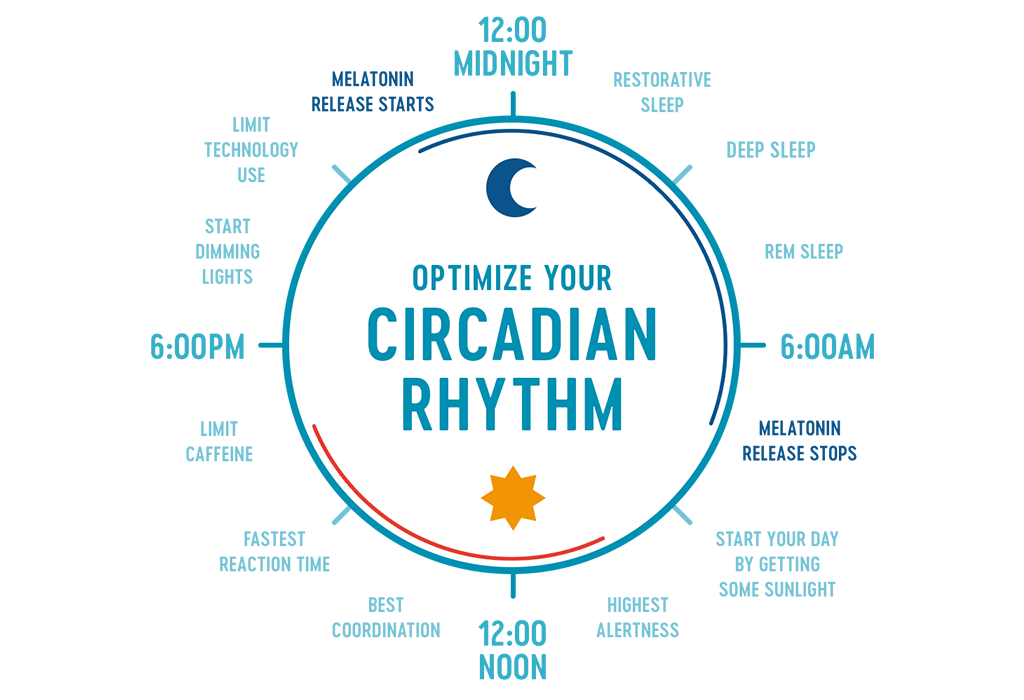
Sleep-wake cycle disruption: Your circadian rhythm, your internal clock, is what keeps your body on track and tells it when to fall asleep and when to wake up. Your brain takes cues from the environment (such as light or darkness) to control this cycle. The brain sends signals to the body to relax, and releases neurotransmitters (“brain chemicals”), such as GABA, and hormones, such as melatonin, that signal your body and the arousal centers and nerves in your brain that it’s time to relax and go to sleep.
There are tons of things that could cause disruption of this cycle. A well-known one is travel and jet-lag, but things like shift-work (hello doctors, nurses, pilots, etc.), staying up late to study, and as previously spoken about your routine and light before bed!
Mental conditions: There are a number of mental conditions that may cause insomnia. We already touched on stress, which would go without saying that a Generalized Anxiety Disorder would have the same effect. Depression is another one that may cause insomnia. Interestingly, insomnia may also cause depression- so it’s a bit of a chicken and an egg scenario. Remember that with depression you may suffer from insomnia, but you may just as well suffer from hypersomnia- or sleeping too much. A proposed reason for sleeplessness (or hypersomnia) is an alteration in melatonin secretion. Though there are many theories as to why sleep disturbances occur with depression, and it seems we just aren’t sure, it seems to stem from an alteration in brain chemical secretion, such as melatonin. Bipolar disorder is another mental condition that is characterised by periods of mania which include racing thoughts, increased distractability, hyper-focus on certain areas of life, excessive participation in sometimes dangerous activities. During this manic episode, the patient may not be able to, or have a need for, sleep.
Physical conditions: There are many conditions that can cause a sleep disorder, however, the one I am going to focus on for this section is obstructive sleep apnoea is the most common sleep-disordered sleep disorder. It involves obstruction of the airways while you sleep resulting in periods of (brief) no breathing (apnoea), or reduction of breathing (hypopnea) during your sleep session. These periods of abnormal breathing can cause you to wake up repeatedly during the night, resulting in poor quality sleep and subsequent daytime consequences. This article has some really nice information on obstructive sleep apnoea for you to check out of you’re interested in learning more.
Idiopathic insomnia: This is a fancy way of saying that “we don’t know the cause”. This is the one where we have ruled out all the other possible causes and we simply don’t know. It has been proposed that it may be the result of an “under-active sleep system” and an “over-active wake system”, but this cannot be verified. I suppose this would fit nicely with the concept of individualization, keeping in mind that everybody is different and everybody produces hormones (like cortisol and melatonin) at different levels, but considering that the body is meant to be in balance (or homeostasis) it is interesting that this system would be faulty.
So what can you do? Above and beyond the tips I highlighted in my previous post which include creating the ideal environment to sleep, managing stress, and creating a relaxing bedtime routine.
Create a routine: This goes beyond creating a relaxing bedtime routine. This involves creating a routine that is going to help to “reset your body clock”. This means that you would go to bed around the same time every night (after your relaxing routine!) and that you would wake up at around the same time every day. In addition to this, don’t forget the effect that light has on this cycle. This means that you would avoid light at night when it’s around time to go to bed, and expose yourself to light in the morning when waking up (which shouldn’t bee too hard if you live in a sunny country like South Africa- lucky us!). For shift workers, it can be a little more difficult. Keep the light exposure in mind by exposing yourself to light when you need to be awake and alert, and darkening your surroundings (like with sunglasses) when you are approaching the time you need to sleep. This article is really awesome and talks about sleep for shift workers!

Supplements:
Melatonin is the most obvious choice. Your pineal gland is stimulated about two hours before you should be sleeping to secrete melatonin. Melatonin helps to put your body into an extremely relaxed state, ideal for sleep. Remember that your body naturally produces it in response to the dark- so try that first! But if you still aren’t coming right, or you have a special case of insomnia such as in jet-lag, you can take melatonin as a supplement for about a month or two and then stop it to see how your sleep is on its own. Melatonin is a scripted item here in South Africa. Why? Because there are some dangers to taking it long term, or if you have certain conditions (such as depression, seizures, etc.). Here’s a cool article!
Gamma-amino-butyric acid (GABA) is what we call an inhibitory neurotransmitter. In a nutshell, this means that it makes the nerve cells less likely to be excited and is therefore more likely to promote sleep. Again, you need to be careful here with a risk of seizures and mood disorders.
Always consult your doctor before taking any medications/supplements!

Homeopathic medications: There are tons of homeopathic medications that can be applied in the case of sleeplessness and insomnia. There are remedies that can be used to help aid the racing thoughts that you might be having that are keeping you up (Coffea cruda, for example), or those that can help if anxiety is the problem (Arsenicum album). Your Homeopath will be able to take a full case history and use homeopathy to support treatment of the cause of your sleepless nights! The bonus is that it’s completely safe and can even be given to kids!

Well, there you have it! A few more options for you if you are suffering from sleepless nights and daytime impairment. I hope they help!
If you have any questions or are struggling with your sleep, pop me an email at Info@DrLornaBlackwell.co.za or visit my website and make a booking online!
Disclaimer! The information provided in this post is not meant to diagnose or treat, but simply to provide information. Always consult your healthcare practitioner before taking any advice/medication/supplements. If you feel that you are suffering from any mentioned conditions in this article please seek professional advice from your healthcare practitioner.
 Love Naturally