
You may have been told at some point, or at least know someone who has been told, “You need to watch your cholesterol”. We all know we should “watch it”, but what does that mean, and how do you do that?
Let’s first talk about what cholesterol is. Cholesterol is a type of fatty molecule that is actually produced mostly in your liver. Cholesterol has a bad reputation. Generally the understanding is that the lower your cholesterol the better- but this isn’t entirely true. Our bodies need cholesterol for a variety of functions.
(1) Cholesterol is an important component of your cell membranes. It allows your cells to be fluid in different temperatures- which means they won’t be stiff in cold temperatures, and won’t melt in hot temperatures. (2) Cholesterol is also a really important precursor (or pre-building block) to making many of your hormones, including oestrogen, progesterone, testosterone, and cortisol. It is so important that these hormones are present and in balance- not too much, but not too little. (3) And finally, cholesterol is a really important player in the synthesis of vitamin D. Vitamin D has many functions- but one of the most well-known functions is in calcium regulation and bone health. Have I convinced you that cholesterol is cool?
The confusion comes in when we talk about good cholesterol and bad cholesterol. When we talk about these, what we’re actually talking about is High Density Lipoproteins (HDL) and Low Density Lipoproteins (LDL). I actually like to think of these liporproteins as busses, as they carry the cholesterol.
“Bad cholesterol” (LDLs): Carries cholesterol from the liver to the rest of your body cells to be used (hopefully you now know why this must happen). The problem comes in when we have “too many busses” carrying a lot of cholesterol to our cells. We’ll talk more about why we don’t want an overload lower down.
“Good cholesterol” (HDLs): Carries cholesterol from the cells of the body back to the liver where it can be broken down. We like this, because that means we won’t get the overload of cholesterol at our cell sites.
As a side note, there is something called “Tricglycerides” that pops up in your cholesterol tests. Triglycerides are actually a type of fat that your body stores in your cells to use as energy for later. They are also carried to your cells by your LDLs.
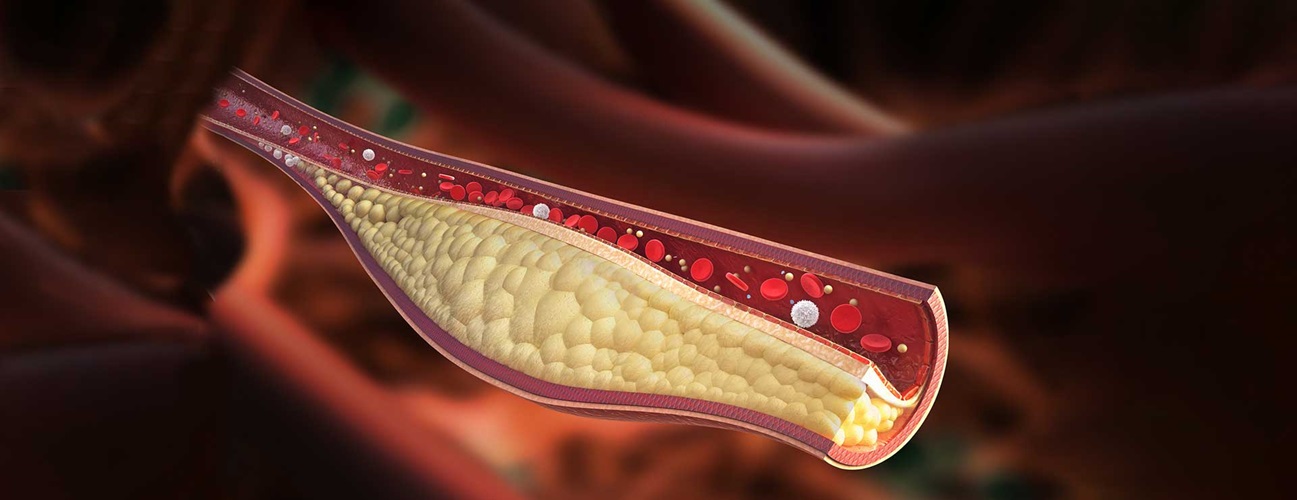
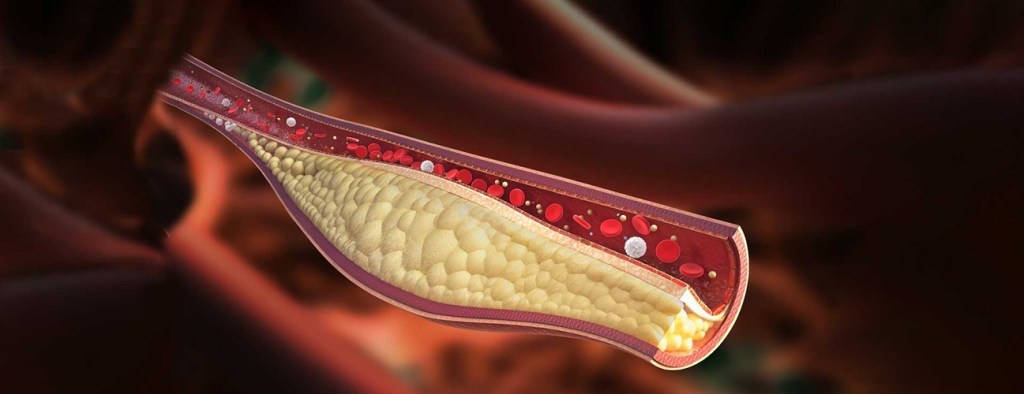
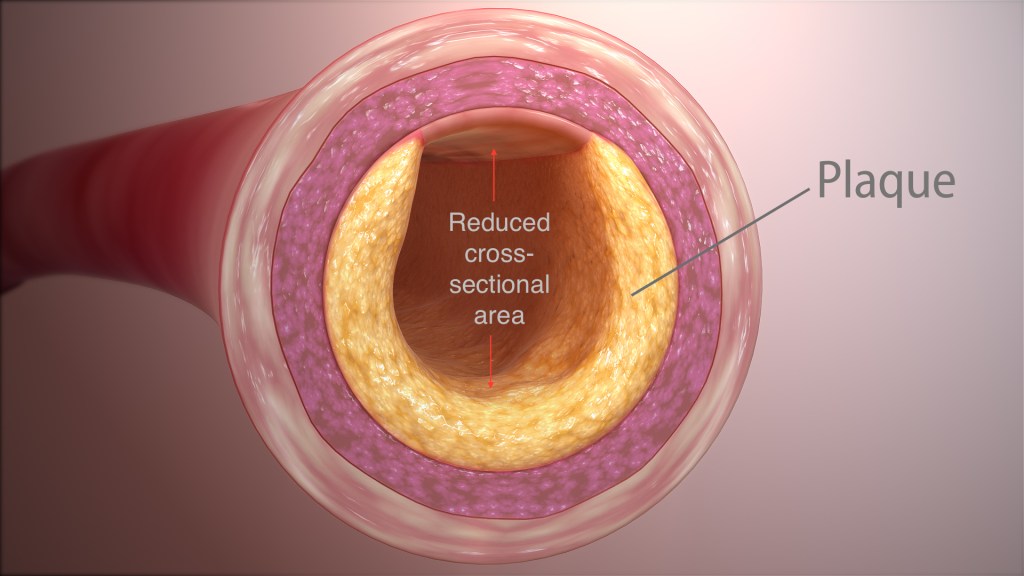
So now we know why we need cholesterol, we now need to understand what it means to have “high cholesterol” and the impact that has on our health. The medical term for “high cholesterol” is Hypercholesterolaemia- which literally means (high) (cholesterol) (in the blood) (This is also a really nice article about hypercholesterolaemia). The problem with having too much cholesterol in the blood, or too high an LDL level, means that we can have an accumulation of cholesterol. Remember that cholesterol is fatty and waxy, so it can accumulate in your blood vessels, and stick there! We do not want sticky, fatty build-up in our vessels as it can make them stiffer, and blocked (something called Atherosclerosis). This can lead to blocked arteries to the heart- resulting in a heart attack, and even clocked arteries to the brain- resulting in a stroke. So it is very important that we make sure our ratio of HDLs to LDLs is in acceptable range.
There are a risk factors that could increase your cholesterol:
Diet: A diet rich in saturated and trans fats means your body will not only need to store those fats in cells, but these fats also increase your LDL cholesterol. (This is a nice video explanation of the different types of fats)
Age: As you get older, your liver may become a little more sluggish in removing the “bad” cholesterol, you’ve also had a much longer time to allow for cholesterol build-up, and a decrease in the synthesis certain hormones may mean an increase in cholesterol.
Lifestyle: Such as poor exercise and smoking. Poor exercise habits means that your body a) cannot use up the fat (or energy) stored in your cells. You’re also missing out on the HDL boosting effects of exercise. Smoking damages your vessels, causing them to harden- making fatty accumulation much more likely.
Genetics: Genetics can play a role in how your body moves cholesterol through cells, and how it gets broken down.
Conditions: Diabetes is very much linked to high cholesterol. The science behind this can be read here, but basically it results in an increase in triglycerides and LDL, as well as a decrease in HDL, and sugar damages vessels, which we already know makes fatty accumulation more likely.

So, what can we do to get our cholesterol levels healthy? I have a few suggestions:
- Improve the risk factors that you can
- Red yeast rice extract
- Niacin (Vitamin B3)
Improving risk factors: This solution is so underrated! Obviously there are things we cannot change, like our age, and our genetics (although we can change the expression of our genes- but that’s a post for another day!). However, things like creating a regular exercise routine, quitting smoking for good, and eating a healthier diet can go a long way in lowering your cholesterol levels. You can start slow: go for a short walk around the neighbourhood, you don’t have to quit smoking cold-turkey- start reducing your cigarettes per day, start introducing more colourful veggies that you actually like into your diet- just make a start. What’s so cool about these is you have complete control, and should you make these simple changes you’ll see the difference and live a longer, happier, healthier life! Sound like it’s worth it to me.

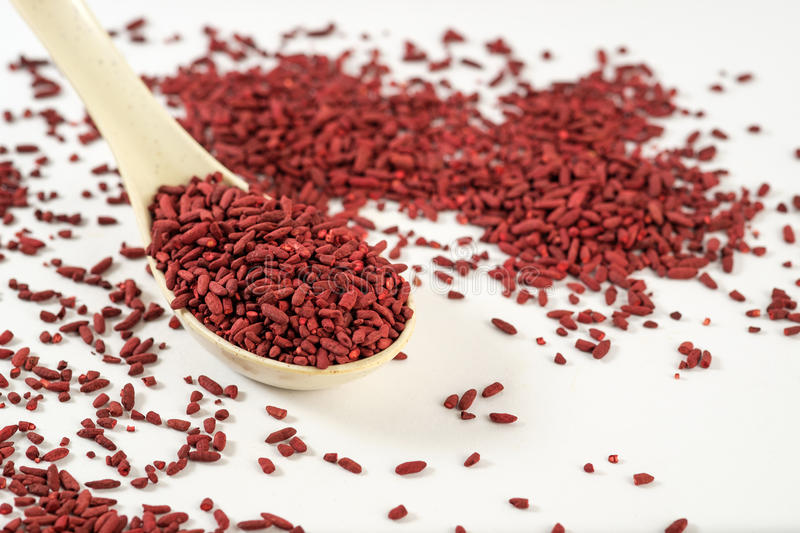
Red yeast rice extract: This is an interesting one that I have seen work really nicely for a lot of people. Red yeast rice extract i made by culturing rice with a reddish-purple yeast called Monascus purpureus. The active ingredient is calsomething called Monacolin K. Monacolin K works by blocking the liver from making cholesterol- much like a statin does!
It is very important that you consult your doctor about using this product as you will definitely need a quality extract that does contain adequate amounts of Monacolin K , and that there is no Citrinin present- a toxic metabolite that can form in the culture and cause kidney damage. This article has some nice extra information.
Niacin: Niacin, or Vitamin B3, is referred to by Harvard Health Publishing‘s writer Harvey Simon M.D as the “granddaddy of cholesterol lowering drugs”. The reason for this is that it was already used waaay back when in order to treat high cholesterol levels. The medical world has since moved on, but there is no denying the amazing ability of Niacin to increase that good cholesterol and decrease those triglycerides (check out this article). Niacin is known to cause flushing and subsequent itching, which many people find very uncomfortable, but it’s use can also cause a few undesirable effects such as liver damage- so I definitely would recommend that you consult your doctor before using it.
So there you go! Getting your cholesterol under control can be easy! Hopefully you will be inspired to start making some changes as soon as you close this page!
If you have any questions or would like more information, pop me an email at Info@DrLornaBlackwell.co.za or visit my website and make a booking online!
Disclaimer! Always consult your primary health care provider for any conditions and before taking any online medical advice. As previously mentioned- be cautious when using supplements and herbals. You must ensure the quality is acceptable to have the desired effects. And critically, just because something is “natural” doesn’t make it 100% safe!
 Love Naturally
Clear and to the point. Nice easy read.
LikeLiked by 1 person
Thank you, Richard! 🙂
LikeLiked by 1 person
Awesome article 😊
LikeLiked by 1 person
I’m so glad you liked it! 🤗 Thank you for your feedback.
LikeLiked by 1 person