
Insomnia: How to Fall Asleep Naturally

If it’s 2am right now and you are wide awake for what feels like the 100th night in a row, Googling everything you can to put yourself asleep then you may be suffering from insomnia! As a follow-on from my previous post (which focused on simple tricks to combat sleeplessness), today we are going to talk about the sleep disorder insomnia and what you can try in addition to those last tips and tricks!.
Photo by Simon Berger on Unsplash

To refresh your memory, sleeplessness was occasional difficulty falling asleep and/or staying asleep, with minimal impact on your life the next day next day. Insomnia is defined as difficulty falling asleep and/or staying asleep (even though you are feeling tired!), resulting in a significant impact on your life caused by tiredness, for at least one month. In fact, some sources say at least 3 nights a week, for 3 months! A big feature that makes insomnia the sleep disorder that it is, is the subsequent daytime effects experienced the next day due to fatigue. This “daytime tiredness” may be affecting your job, your social life, your relationships with family and friends, your study life, etc. You may be feeling exhausted, more irritable and moody, having difficulty focusing or remembering things. To sum up, if your sleeplessness is ongoing (chronic) and is having an effect on your life, you may be suffering from the sleep disorder, insomnia.

There are many reasons that you may be suffering, and a few were discussed in my previous post, such as stress and light and blue-light. I want to look at a few more that may cause chronic sleeping issues here:

Sleep-wake cycle disruption: Your circadian rhythm, your internal clock, is what keeps your body on track and tells it when to fall asleep and when to wake up. Your brain takes cues from the environment (such as light or darkness) to control this cycle. The brain sends signals to the body to relax, and releases neurotransmitters (“brain chemicals”), such as GABA, and hormones, such as melatonin, that signal your body and the arousal centers and nerves in your brain that it’s time to relax and go to sleep.

There are tons of things that could cause disruption of this cycle. A well-known one is travel and jet-lag, but things like shift-work (hello doctors, nurses, pilots, etc.), staying up late to study, and as previously spoken about your routine and light before bed!
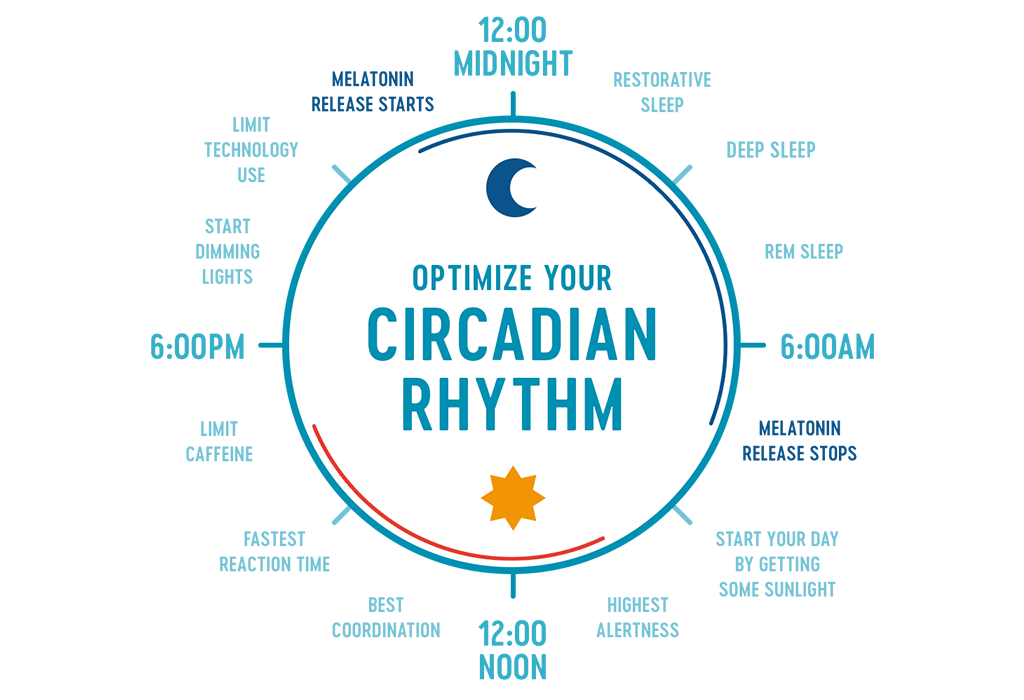
Circadian rhythm diagram from this article

Mental conditions: There are a number of mental conditions that may cause insomnia. We already touched on stress, which would go without saying that a Generalized Anxiety Disorder would have the same effect. Depression is another one that may cause insomnia. Interestingly, insomnia may also cause depression- so it’s a bit of a chicken and an egg scenario. Remember that with depression you may suffer from insomnia, but you may just as well suffer from hypersomnia- or sleeping too much. A proposed reason for sleeplessness (or hypersomnia) is an alteration in melatonin secretion. Though there are many theories as to why sleep disturbances occur with depression, and it seems we just aren’t sure, it seems to stem from an alteration in brain chemical secretion, such as melatonin. Bipolar disorder is another mental condition that is characterised by periods of mania which include racing thoughts, increased distractability, hyper-focus on certain areas of life, excessive participation in sometimes dangerous activities. During this manic episode, the patient may not be able to, or have a need for, sleep.

Physical conditions: There are many conditions that can cause a sleep disorder, however, the one I am going to focus on for this section is obstructive sleep apnoea is the most common sleep-disordered sleep disorder. It involves obstruction of the airways while you sleep resulting in periods of (brief) no breathing (apnoea), or reduction of breathing (hypopnea) during your sleep session. These periods of abnormal breathing can cause you to wake up repeatedly during the night, resulting in poor quality sleep and subsequent daytime consequences. This article has some really nice information on obstructive sleep apnoea for you to check out of you’re interested in learning more.

Idiopathic insomnia: This is a fancy way of saying that “we don’t know the cause”. This is the one where we have ruled out all the other possible causes and we simply don’t know. It has been proposed that it may be the result of an “under-active sleep system” and an “over-active wake system”, but this cannot be verified. I suppose this would fit nicely with the concept of individualization, keeping in mind that everybody is different and everybody produces hormones (like cortisol and melatonin) at different levels, but considering that the body is meant to be in balance (or homeostasis) it is interesting that this system would be faulty.
Photo by Aleksandar Cvetanovic on Unsplash

So what can you do? Above and beyond the tips I highlighted in my previous post which include creating the ideal environment to sleep, managing stress, and creating a relaxing bedtime routine.

Create a routine: This goes beyond creating a relaxing bedtime routine. This involves creating a routine that is going to help to “reset your body clock”. This means that you would go to bed around the same time every night (after your relaxing routine!) and that you would wake up at around the same time every day. In addition to this, don’t forget the effect that light has on this cycle. This means that you would avoid light at night when it’s around time to go to bed, and expose yourself to light in the morning when waking up (which shouldn’t bee too hard if you live in a sunny country like South Africa- lucky us!). For shift workers, it can be a little more difficult. Keep the light exposure in mind by exposing yourself to light when you need to be awake and alert, and darkening your surroundings (like with sunglasses) when you are approaching the time you need to sleep. This article is really awesome and talks about sleep for shift workers!
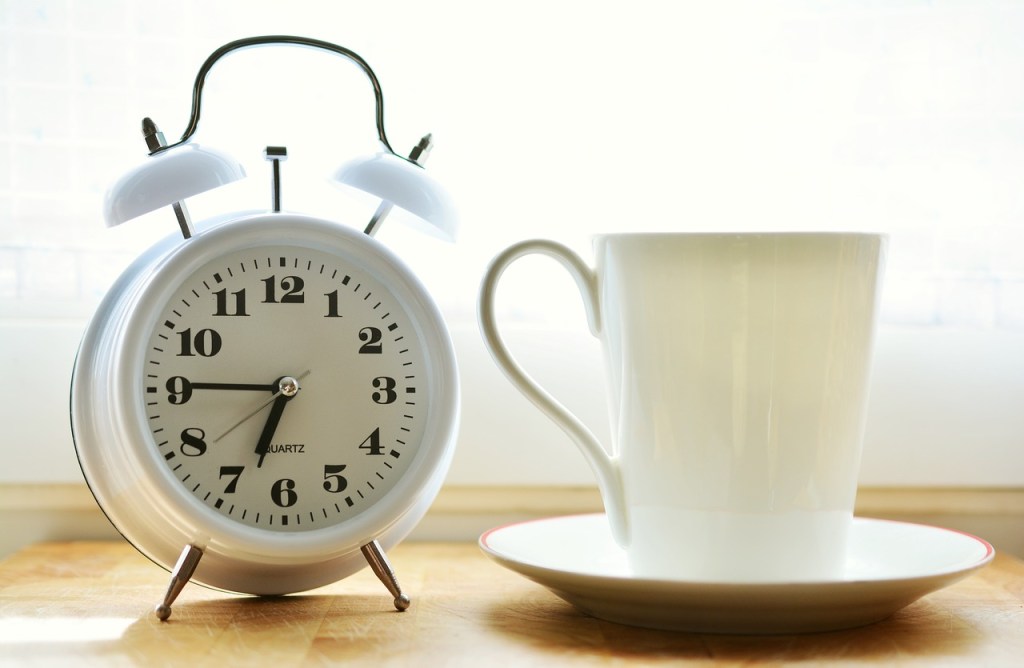
Image by congerdesign from Pixabay

Supplements:

Melatonin is the most obvious choice. Your pineal gland is stimulated about two hours before you should be sleeping to secrete melatonin. Melatonin helps to put your body into an extremely relaxed state, ideal for sleep. Remember that your body naturally produces it in response to the dark- so try that first! But if you still aren’t coming right, or you have a special case of insomnia such as in jet-lag, you can take melatonin as a supplement for about a month or two and then stop it to see how your sleep is on its own. Melatonin is a scripted item here in South Africa. Why? Because there are some dangers to taking it long term, or if you have certain conditions (such as depression, seizures, etc.). Here’s a cool article!

Gamma-amino-butyric acid (GABA) is what we call an inhibitory neurotransmitter. In a nutshell, this means that it makes the nerve cells less likely to be excited and is therefore more likely to promote sleep. Again, you need to be careful here with a risk of seizures and mood disorders.

Always consult your doctor before taking any medications/supplements!
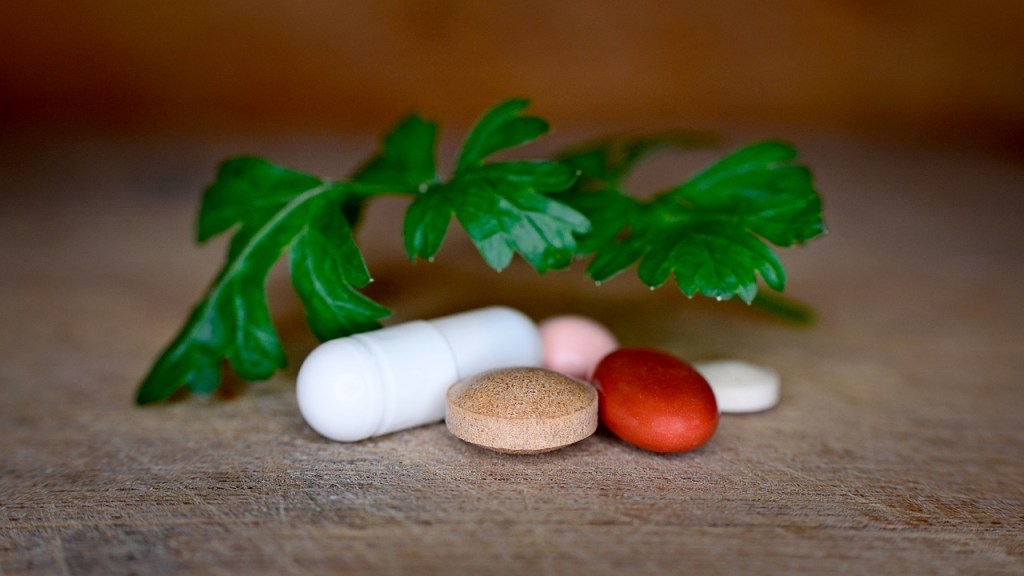
Image by Jerzy Górecki from Pixabay

Homeopathic medications: There are tons of homeopathic medications that can be applied in the case of sleeplessness and insomnia. There are remedies that can be used to help aid the racing thoughts that you might be having that are keeping you up (Coffea cruda, for example), or those that can help if anxiety is the problem (Arsenicum album). Your Homeopath will be able to take a full case history and use homeopathy to support treatment of the cause of your sleepless nights! The bonus is that it’s completely safe and can even be given to kids!

Photo by Ann Danilina on Unsplash

Well, there you have it! A few more options for you if you are suffering from sleepless nights and daytime impairment. I hope they help!

If you have any questions or are struggling with your sleep, pop me an email at Info@DrLornaBlackwell.co.za or visit my website and make a booking online!

Disclaimer! The information provided in this post is not meant to diagnose or treat, but simply to provide information. Always consult your healthcare practitioner before taking any advice/medication/supplements. If you feel that you are suffering from any mentioned conditions in this article please seek professional advice from your healthcare practitioner.


A Guide to the Sweetest Dreams You’ve Ever Had

We’ve all had one of those nights: lying there at 2am, staring at the ceiling. Eyes burning, mind racing, and you’re considering getting up to attempt some bedtime yoga for the first time ever. But what about when this happens too often and starts to affect our daily lives? Whether you’re struggling with sleeplessness a little too often, or full-blown insomnia, here are some techniques you can try!

Photo by Kinga Cichewicz on Unsplash

Insomnia vs Sleeplessness

Insomnia is a sleep disorder. It’s characterized by difficulty falling asleep, staying asleep, and poor quality sleep that results in impairments during the next day. This is a topic on its own, and I will cover it in my next blog post.

Sleeplessness happens occasionally and can mean difficulty falling asleep, staying asleep, and not getting good quality sleep, but the daytime impairments the next day are minimal or absent. Sleeplessness can occur for a multitude of reasons:

Environmental factors: These would include the nature of your surroundings as you are trying to go to sleep.

(1) Your “sleep posture” plays a huge role in how well you sleep. You may injure your back or neck, you may struggle with heartburn, or even sleep apnea. All of these things could contribute to sleeplessness and poor quality sleep. Next time you are struggling with your sleep, take note of how you are lying. Are you, firstly, in a bed or on a couch in front of the TV? What position are you in? Are you feeling comfortable or is there strain on your body? This article had some great information on the different sleeping positions and how they can help you or hurt you!

(2) Your circadian rhythm, also known as your sleep-wake cycle, is your internal clock that tells your body when to be awake and when to be tired. Lights of any kind tells your brain that it’s time to be awake and thus you struggle to fall asleep. You are basically trying to tell your body to fall asleep in what your brain thinks is some time during the day!

Blue light fits into this category also by messing with our clock, and is very applicable to our lives these days. Blue light is the artificial light that comes from our cellphones, laptops, and TVs. During the daytime after exposure we might see a boost in our concentration and alertness, but that is not so desirable when we are trying to go to sleep!

(3) Ever tried to go to sleep to the sound of a ticking clock? A snoring partner? A party next door? Your brain picks up on these sounds and stays awake trying to process them. You may struggle to fall asleep when your brain is processing external information.

Stress: Stress and anxiety are a huge block to sleep. Not only does your brain have to process and organize the information it’s sifting through- all those terrible, stressful thoughts- but it also launches a stress response from your body. Your heart-rate may increase and your cortisol may rise. Cortisol is your “stress hormone” – it’s the one that helps to launch your fight or flight response so that you can survive your encounter with that dinosaur (in this case, the financial woes, or the upcoming exam). Cortisol helps us become more alert and aware, which is why it peaks in the morning and decreases throughput the day. What I’m trying to say is: How can you expect your body to fall asleep when you are staring into the eyes of a dinosaur? (or so your brain thinks…)

Temperature: Our body temperature tends to be cooler at night as we sleep, and rise in the morning as we approach waking up. Temperature is strongly intertwined with the sleep-wake cycle – you can read the science in this awesome article!

Counting sheep? Try the techniques below!

Sleep Hygiene Techniques

Keeping all of the above causes of sleeplessness in mind, we can see that actually the techniques we refer to as “sleep hygiene” are very logical.

(1) Create the ideal environment:

• Ensure that you are lying in bed in a position that is comfortable for you- that supports your body and allows appropriate airflow to your lungs.

• Ensure that the room is as dark as possible. Light is disturbing and even light from under the door, or the red alarm light could be impacting your sleep. And definitely make sure that you try your best to avoid blue light 2 hours before bed (I use a blue light filter on my phone!). This means no TV, checking emails, or social media before bed- I know I know, easier said than done…

• Ensure that all controllable sounds are taken care of. Avoid putting a clock in your room, for example. You can even invest in a good pair of ear plugs for those extra noise-sensitive nights.

• According to Sleepfoundation.org, the ideal room temperature is 18⁰C. This seems a little cold for my liking, and maybe you feel the same. Make sure that the room is comfortable for you- not too hot and not too cold. Ensure that your pajamas and duvet set aren’t going to make you too hot or too cold as well.

(2) Manage stress

Stress is unfortunately a part of our lives more often than not. I wish I could recommend getting rid of the source of your stress all together (if you can, by all means do it!), but for most of us it’s just not an option. If it’s not finances, it’s kids, it’s work, it’s family drama. The best we can do is learn techniques that one can use to manage stress better. You can use supplements such as L-theanine, herbal remedies such as Avena sativa, and flower essences such as Bach Rescue Remedy. But you must make an effort to practice mindfulness and employ techniques to manage your stress. Get help from a professional if you feel like you are not coping.

(3) Create a relaxing bedtime routine

Included in this routine should be things that calm you and make you happy and relaxed. Use thing like lavender in your bath, drink some chamomile tea, do some light stretching before bed. The whole idea of the routine is to relax you and ensure that your brain isn’t over-processing information (put down the phone!), and that your body doesn’t feel like it’s getting ready to run a marathon.

These techniques can go a long way in helping you fall asleep whether you are suffering from insomnia or occasional sleeplessness. Give them a try and let me know which one helped you most!

If you have any questions or are struggling with your sleep, pop me an email at Info@DrLornaBlackwell.co.za or visit my website and make a booking online!

Disclaimer! Always consult your primary health care provider for any conditions and before taking any online medical advice. As previously mentioned- be cautious when using supplements and herbals.

Cholesterol- What’s The Big Deal?

You may have been told at some point, or at least know someone who has been told, “You need to watch your cholesterol”. We all know we should “watch it”, but what does that mean, and how do you do that?

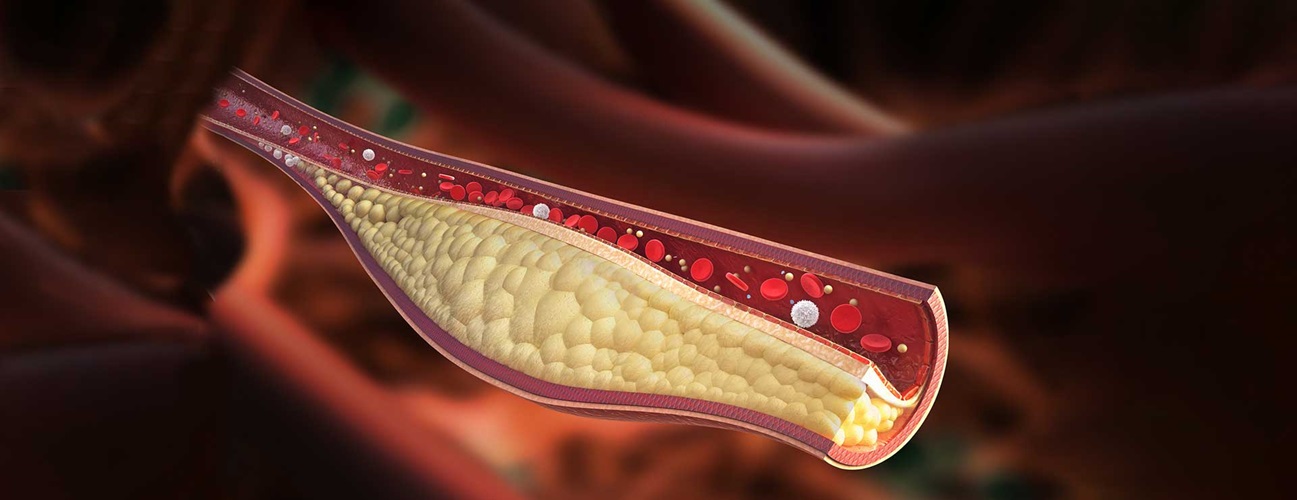
This awesome picture is from this awesome article by Johns Hopkins Medical

Let’s first talk about what cholesterol is. Cholesterol is a type of fatty molecule that is actually produced mostly in your liver. Cholesterol has a bad reputation. Generally the understanding is that the lower your cholesterol the better- but this isn’t entirely true. Our bodies need cholesterol for a variety of functions.

(1) Cholesterol is an important component of your cell membranes. It allows your cells to be fluid in different temperatures- which means they won’t be stiff in cold temperatures, and won’t melt in hot temperatures. (2) Cholesterol is also a really important precursor (or pre-building block) to making many of your hormones, including oestrogen, progesterone, testosterone, and cortisol. It is so important that these hormones are present and in balance- not too much, but not too little. (3) And finally, cholesterol is a really important player in the synthesis of vitamin D. Vitamin D has many functions- but one of the most well-known functions is in calcium regulation and bone health. Have I convinced you that cholesterol is cool?

The confusion comes in when we talk about good cholesterol and bad cholesterol. When we talk about these, what we’re actually talking about is High Density Lipoproteins (HDL) and Low Density Lipoproteins (LDL). I actually like to think of these liporproteins as busses, as they carry the cholesterol.

Bad cholesterol” (LDLs): Carries cholesterol from the liver to the rest of your body cells to be used (hopefully you now know why this must happen). The problem comes in when we have “too many busses” carrying a lot of cholesterol to our cells. We’ll talk more about why we don’t want an overload lower down.

Good cholesterol” (HDLs): Carries cholesterol from the cells of the body back to the liver where it can be broken down. We like this, because that means we won’t get the overload of cholesterol at our cell sites.

As a side note, there is something called “Tricglycerides” that pops up in your cholesterol tests. Triglycerides are actually a type of fat that your body stores in your cells to use as energy for later. They are also carried to your cells by your LDLs.

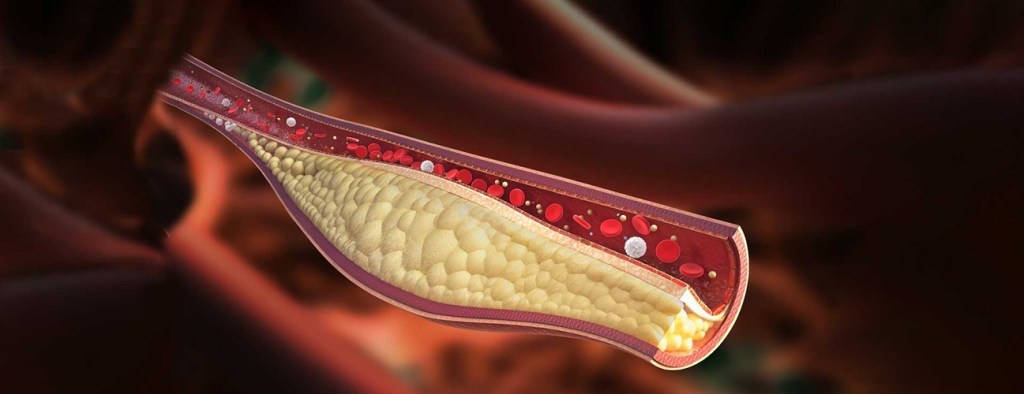
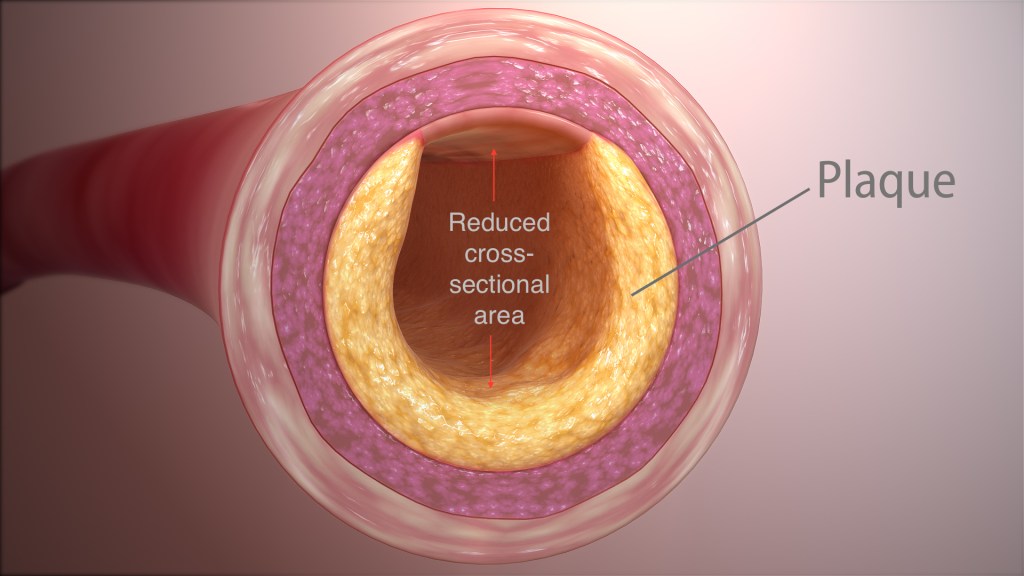
So now we know why we need cholesterol, we now need to understand what it means to have “high cholesterol” and the impact that has on our health. The medical term for “high cholesterol” is Hypercholesterolaemia- which literally means (high) (cholesterol) (in the blood) (This is also a really nice article about hypercholesterolaemia). The problem with having too much cholesterol in the blood, or too high an LDL level, means that we can have an accumulation of cholesterol. Remember that cholesterol is fatty and waxy, so it can accumulate in your blood vessels, and stick there! We do not want sticky, fatty build-up in our vessels as it can make them stiffer, and blocked (something called Atherosclerosis). This can lead to blocked arteries to the heart- resulting in a heart attack, and even clocked arteries to the brain- resulting in a stroke. So it is very important that we make sure our ratio of HDLs to LDLs is in acceptable range.

Another awesome image taken from another awesome article

There are a risk factors that could increase your cholesterol:

Diet: A diet rich in saturated and trans fats means your body will not only need to store those fats in cells, but these fats also increase your LDL cholesterol. (This is a nice video explanation of the different types of fats)

Age: As you get older, your liver may become a little more sluggish in removing the “bad” cholesterol, you’ve also had a much longer time to allow for cholesterol build-up, and a decrease in the synthesis certain hormones may mean an increase in cholesterol.

Lifestyle: Such as poor exercise and smoking. Poor exercise habits means that your body a) cannot use up the fat (or energy) stored in your cells. You’re also missing out on the HDL boosting effects of exercise. Smoking damages your vessels, causing them to harden- making fatty accumulation much more likely.

Genetics: Genetics can play a role in how your body moves cholesterol through cells, and how it gets broken down.

Conditions: Diabetes is very much linked to high cholesterol. The science behind this can be read here, but basically it results in an increase in triglycerides and LDL, as well as a decrease in HDL, and sugar damages vessels, which we already know makes fatty accumulation more likely.

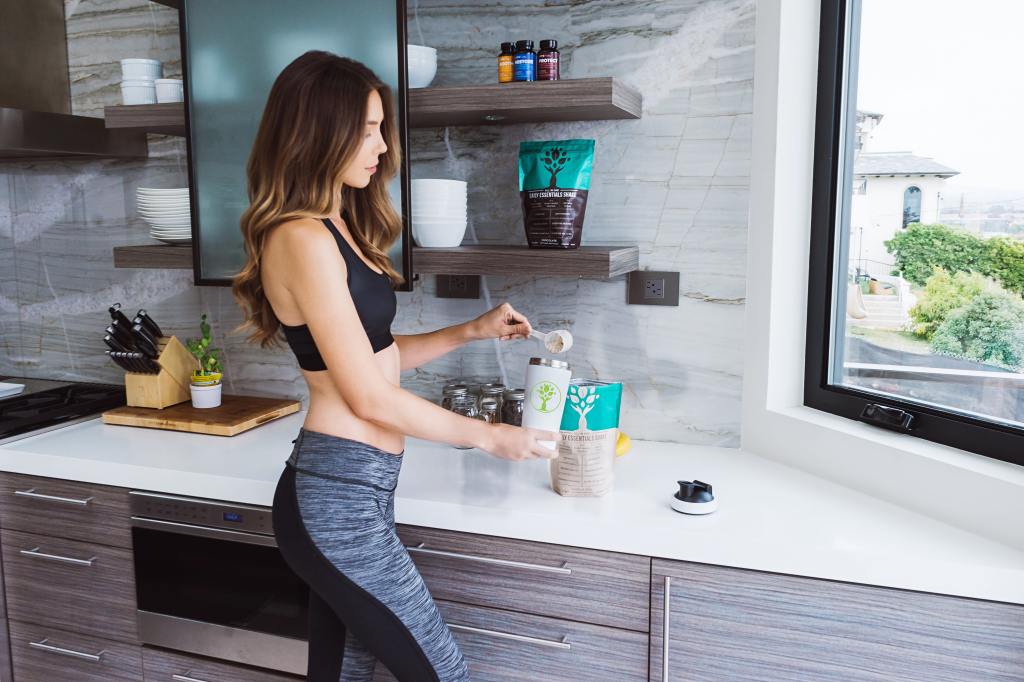
Photo by LYFE Fuel on Unsplash

So, what can we do to get our cholesterol levels healthy? I have a few suggestions:

  1. Improve the risk factors that you can
  2. Red yeast rice extract
  3. Niacin (Vitamin B3)

Improving risk factors: This solution is so underrated! Obviously there are things we cannot change, like our age, and our genetics (although we can change the expression of our genes- but that’s a post for another day!). However, things like creating a regular exercise routine, quitting smoking for good, and eating a healthier diet can go a long way in lowering your cholesterol levels. You can start slow: go for a short walk around the neighbourhood, you don’t have to quit smoking cold-turkey- start reducing your cigarettes per day, start introducing more colourful veggies that you actually like into your diet- just make a start. What’s so cool about these is you have complete control, and should you make these simple changes you’ll see the difference and live a longer, happier, healthier life! Sound like it’s worth it to me.

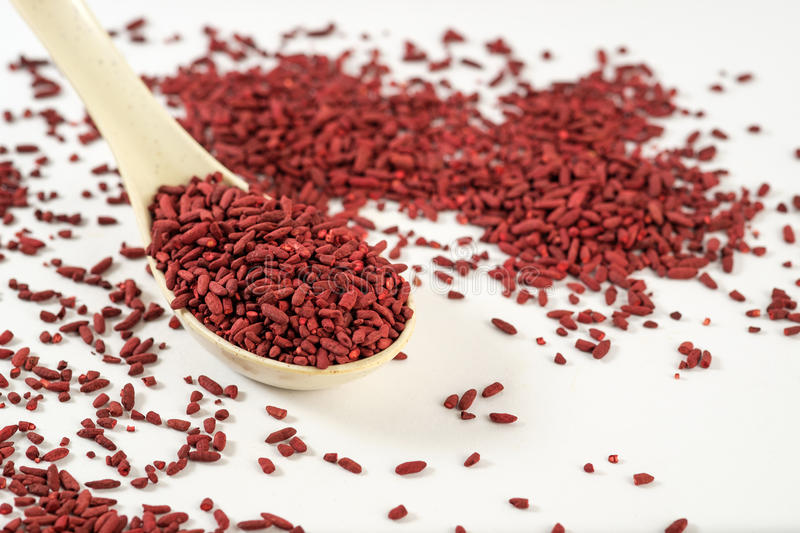
Red yeast rice extract: This is an interesting one that I have seen work really nicely for a lot of people. Red yeast rice extract i made by culturing rice with a reddish-purple yeast called Monascus purpureus. The active ingredient is calsomething called Monacolin K. Monacolin K works by blocking the liver from making cholesterol- much like a statin does!

It is very important that you consult your doctor about using this product as you will definitely need a quality extract that does contain adequate amounts of Monacolin K , and that there is no Citrinin present- a toxic metabolite that can form in the culture and cause kidney damage. This article has some nice extra information.

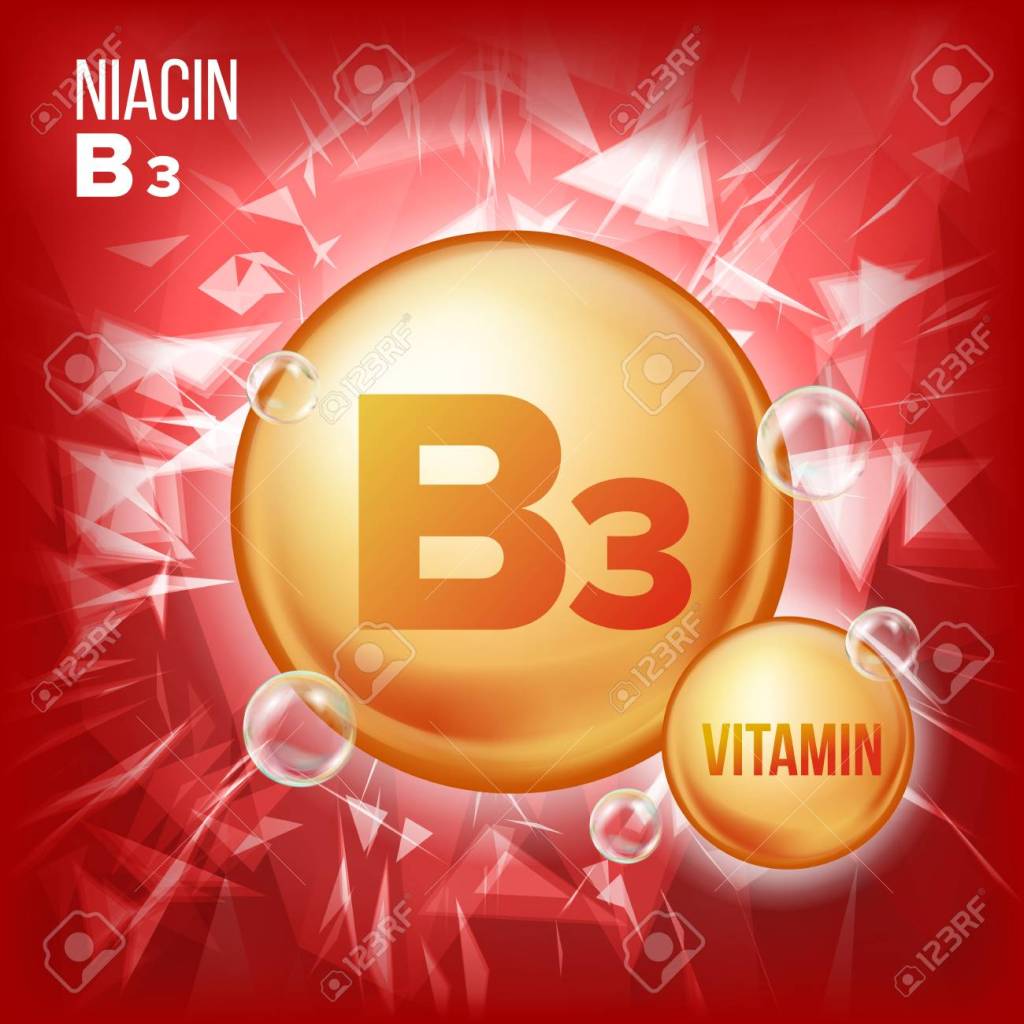
Niacin: Niacin, or Vitamin B3, is referred to by Harvard Health Publishing‘s writer Harvey Simon M.D as the “granddaddy of cholesterol lowering drugs”. The reason for this is that it was already used waaay back when in order to treat high cholesterol levels. The medical world has since moved on, but there is no denying the amazing ability of Niacin to increase that good cholesterol and decrease those triglycerides (check out this article). Niacin is known to cause flushing and subsequent itching, which many people find very uncomfortable, but it’s use can also cause a few undesirable effects such as liver damage- so I definitely would recommend that you consult your doctor before using it.

So there you go! Getting your cholesterol under control can be easy! Hopefully you will be inspired to start making some changes as soon as you close this page!

If you have any questions or would like more information, pop me an email at Info@DrLornaBlackwell.co.za or visit my website and make a booking online!

Disclaimer! Always consult your primary health care provider for any conditions and before taking any online medical advice. As previously mentioned- be cautious when using supplements and herbals. You must ensure the quality is acceptable to have the desired effects. And critically, just because something is “natural” doesn’t make it 100% safe!

Burn Baby Burn: Fever 101

Piling on the blankets, heating up your hot water bottle, drinking hot tea to try and warm up; then suddenly sweating from the heat, changing into your shorts and T-shirt, you wish you could take a dip in the Atlantic ocean just to cool down. Fever and chills can be very uncomfortable- but did you know that this is actually a very clever and sophisticated process?

Image by succo from Pixabay

What is a fever and why do I get one?

Your body temperature normally sits at around 37°C. There is room for variation in this temperature (but only of approx. 0.6°C). Your body temperature tends to be cooler in the morning. A fever is an increase in your body temperature above normal- so anything higher than 37.6°C.

You have a structure in your brain called the Hypothalamus, which has many functions, but for the purpose of this article we will focus on its function as a thermostat. It regulates the temperature of your body by monitoring the blood that “baths” it, and signalling your body to respond in different ways to increase or decrease the temperature to keep it at it’s normal. This is where things get exciting. When you get an infection, your body raises its temperature to an uncomfortable level that certain pathogens can’t survive in! So, your thermostat will increase its set-point to a little higher than normal, and so you will now feel cold! Your body will try different things to help generate heat, and one of those things is muscle trembling! And there you have your chills, and shaking! Once you have finally generated enough heat to get to your body’s new set-point of “normal” you’ll feel hot again. Your brain has essentially tricked your body into thinking it was cold so that it could destroy the pathogen.

Image by Iván Tamás from Pixabay

Fevers can happen for a multitude of reasons. Infection is the most common reason- bacterial or viral infection. I see it a lot in children who have tonsilitis or an ear infection. In adults I usually see fevers in Influenza. However, you can get a fever with a non-infectious cause. These include certain auto-immune conditions, inflammatory conditions, endocrine conditions, medications, and more. So it’s important that you talk to your health care provider so that they can ask the right questions to ascertain where the fever is coming from!

Do I need to measure my own / my child’s temperature?

Parents are invaluable in picking up the tiniest, but very important, changes. I take what a parent is telling me seriously… BUT you need to do more than just feeling your child’s forehead! You need to take that temperature with your thermometer because high fevers (over 38°C) can get dangerous and cause febrile seizures in children. Fevers do serve a purpose so it’s not necessarily a bad thing if your child has a fever- but it’s important to give your doctor all the necessary information so that they can guide you in the right direction!

Image by Gundula Vogel from Pixabay

If your child has a seizure or a high fever with a history of seizures take them to the emergency room immediately.

Should I break a fever or not? This is an interesting question, and it seems there are arguments for both sides of the coin. You should seek medical advice if the fever is persistent, if the fever is present in a child, and if the fever is higher than 38°C. If however, it’s causing you some discomfort and you decide that you would rather try to break it than let it ride on, there are a few things you can do!

  1. Antipyretics
  2. Old school
  3. Homeopathic medications
  4. Boost your immune system

Antipyretics: There are conventional medications that can reset the thermostat and help break your fever. These include aspirin and paracetamol. Do not give aspirin to a child as it can cause serious problems!

Old school: Use a lukewarm compress on your forehead, or take a nice lukewarm bath. Be sure to drink plenty of water and get your rest!

Homeopathic medications: Homeopathic treatment is awesome in these situations. They are completely safe for children of all ages, and pregnant moms. And their mechanism of action means that they work with the healing mechanisms in your own body to cure the cause of your fever and bring it down safely and keep it there!

Boost your immune system: Sometimes your immune system just needs a little bit of enhancement! Check out these posts I did with ideas for you and your baby on how to boost your immune system!

Image by Myriam Zilles from Pixabay

So hopefully you can rest assured that your body is working hard to keep you healthy!

If you have any questions or would like more information, pop me an email at Info@DrLornaBlackwell.co.za or visit my website and make a booking online!

Disclaimer! Always consult your primary health care provider for any conditions and before taking any online medical advice.

Cooped Up Kids Bouncing Off the Walls? Calm Them Down With These Tips

Some are enjoying the tranquility of quieter neighbourhoods, quieter roads, and the stillness in their homes- allowing them a place to relax, work from home, and connect in peace and quiet. On the flip side of the coin, others are struggling to balance house-work, office-work, and parent-work while still keeping their little ones as occupied as possible!

Photo by Allen Taylor on Unsplash

Children are not afraid to be who they are- and some are quieter and some are high-energy, but whichever category your child falls into all kids need mental and physical stimulation. Their brains are developing and they are literal balls of energy. They need an outlet to “discharge” otherwise we’re going to end up with some very unhappy, overly-energized children who don’t know what to do with themselves. Here are a few things you can do to try keep them calm, and you sane:

  1. Mentally stimulating activities
  2. Physical activities
  3. Keep a routine
  4. Homeopathic medication

As an aside, I LOVE this article on the importance of play for children!

Mentally stimulating activities: When kids are at school or creche, they are in a different environment to the usual home environment. This means that they are discovering new things, making social connections, and having new experiences every day. Their brains are literally forming new connections as they are learning! The wonderful thing is that there is no reason this new-connection work can’t happen at home too.

Reading is an amazing way for kids to exercise their brains. Not only does it help them with their reading skills but it also exercises their imaginations and they learn new things from an outside world in the comfort of their own homes (even if that world is a fantasy world!). If your child is too young to read, then read too them. It’s a great way to still give that imagination a workout, but with the added benefit of some extra special bonding.

Photo by Josh Applegate on Unsplash

Art is another really cool way to stimulate your child’s brain. I’ve received some really great drawings from my kid-patients with just a pen and paper, but the sky is the limit! Colour pens, pencils, crayons, finger-painting, watercolours, coloured paper- the options are endless. Give them a prompt every day- for example, “today I’d like you to draw a picture of our family”. You can also make requests that will take a lot more thought and attention to detail, such as: “Today I’d like you to draw what your alien space-pet would look like!” or even, “Today I’d like for you to make up a whole new world- what do the people look like? What language do they speak? What do the animals look like? What do the cars look like?”. I’m sure you’ll get some amazing artworks to hang in their rooms (and a little bit of quiet time for yourself!)

Photo by Senjuti Kundu on Unsplash

Physical activities: Children need to be able to move and play! Physical activities provide the perfect outlet for pent-up energy.

Gardening is something my neighbour’s children seem to really enjoy. They are so cute with their sun-hats (safety first!), spades, and boots. They sit in a little section of the garden and dig, plant flowers (dig them up again!), discover new bugs and worms- it’s physically demanding (with the added benefit of new discoveries!) and they’ll be sure to need a nap afterwards (more quiet time for you!). Yes, a section of your garden you don’t mind handing over to your kids is ideal. But for those of you living in apartments with no garden, why not get a big pot, fill it with some soil and let your kids plant smaller plants?

Photo by Anna Earl on Unsplash

Hopscotch is a game I love for kids. Chalk is easy to wash off your floor (bonus) and it not only exercises those brains but it requires a lot of jumping. In fact you could incorporate the hopscotch as part of an obstacle course (if you have the space). Having a game with a beginning and an end is a good way to stimulate those reward centres in the brain as well- boosting self confidence!

Photo by Jon Tyson on Unsplash

Keeping a routine: As a kid, consistency is very important. Imagine having your whole world around you change, and you’re not even sure you understand why! It’s been weird enough being an adult and adjusting to these changes, imagine being little and not understanding why you can’t see your friends (or even grandma!), why you can’t go along for walking the dog, why you have to stay inside all. the. time! Just as it’s important to keep a schedule for us as adults, it’s vitally important to keep a level of normalcy with a routine with your kids.

This means that they should go to bed at the normal time, wake up at the normal time. Get them ready for the day, just as you would if they were going to school (although I think a pajama day is allowed every now and then!). Give them their breakfast around the usual time. Keep them mentally stimulated during “school time”, let them have breaks, and naps, just as usual. Get them ready for bed with a bath at the usual time and tuck them in when they usually get tucked in. Having a routine that doesn’t break means that they will have to adjust to a lot less, and will be healthier for it.

Photo by Jelleke Vanooteghem on Unsplash

Of course, this period where we are needing to stay at home comes with it’s challenges, but we can also take the special gift of time we have been given and use it to its full potential. Spend a little extra time than usual with your kids, even if it doesn’t fit in with the usual routine. Who knows you may love it so much you make it part of the daily routine for the rest of time!

Homeopathic medication: A big concept in alternative medicine is finding the cause. Obviously kids being cooped up all day with no form of discharge is going to take a toll on their moods, their energies and their behaviours. So it’s vital that we attack the issue with a multi-level approach- stimulating them mentally, allowing them time to discharge physically, keeping a schedule- these are important causes of disharmony that cannot be overlooked. The wonderful thing about using homeopathic medication is that it treats the symptoms a person is having no matter the cause. This means that all those lockdown symptom your child (and you) is dealing with can be alleviated with the correct homeopathic formulation! A qualified homeopath will be able to assess your child and ask all the right questions to be able to formulate a very specific and completely safe homeopathic medication for your child. These are just some examples of “lockdown symptoms” that homeopathic intervention can assist in:

  • Difficulty sleeping
  • Bad mood
  • Temper tantrums
  • Bouncing off the walls

Anything where a symptom is present, homeopathy can help!

Photo by Seven Shooter on Unsplash

Stay happy and healthy during this time. Ensure that you are using it to it’s full potential- and yes, sometimes that means pajama and pancake Thursdays!

If your kids are bouncing off the walls and you’re looking for more help to calm them down, pop me an email at Info@DrLornaBlackwell.co.za or visit my website and make a booking online!

Disclaimer! Please consult your primary health care provider before undertaking any medical advice.

Design a site like this with WordPress.com
Get started